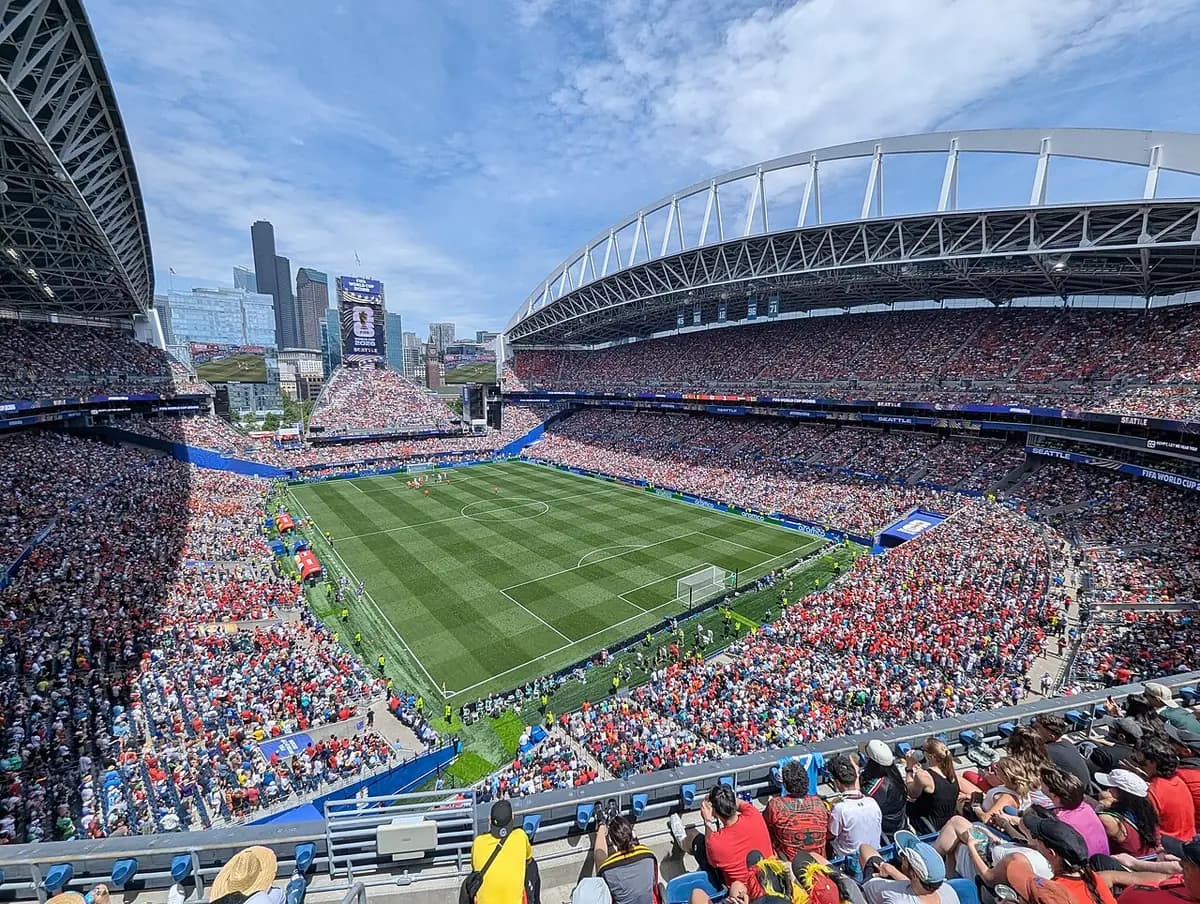
The United States is the heart of the first three-nation, 48-team World Cup, staging 11 of the 16 stadiums and the great majority of the matches, including the final. But these are not anonymous arenas thrown up for the occasion — they are among the most famous (and most extravagant) stadiums in the world, home to NFL dynasties, Super Bowls and Olympic ceremonies.
This is a guide to those eleven venues: what each one is, what makes it remarkable, and which city to base yourself in around it — stadium by stadium, with the host city linked for each.
The 2026 World Cup in brief
The 2026 FIFA World Cup, played across June and July 2026, is the biggest in history: the first with 48 teams and 104 matches, and the first co-hosted by three countries — the United States, Canada and Mexico — across 16 cities. The opening match is in Mexico City, at the historic Estadio Azteca; the final is in the New York area, at MetLife Stadium on 19 July.
The US carries the lion's share: 11 host stadiums and the bulk of the matches, including both semi-finals, the third-place playoff and the final. One quirk worth knowing before you book — several US stadiums sit well outside the city they are named after, so check transit and hotels carefully for each.
MetLife Stadium — New York / New Jersey
Opened in 2010 at a cost of about 1.6 billion dollars — then the most expensive stadium ever built in the US — MetLife is the largest stadium in the NFL (around 82,500) and the only one shared by two teams, the New York Giants and the New York Jets. The open-air bowl has hosted Super Bowl XLVIII, two editions of WrestleMania and the 2016 Copa América Centenario final, and ranks among the world's top-grossing concert venues. Now it takes the biggest prize in the sport: the 2026 World Cup final on 19 July — the only 2026 venue to stage both a Round of 16 and the final. It stands in East Rutherford, New Jersey, 16 km west of Manhattan (not in New York City itself); NJ Transit runs match-day trains to the Meadowlands from Penn Station.
Stadium: MetLife Stadium. Explore New York City.
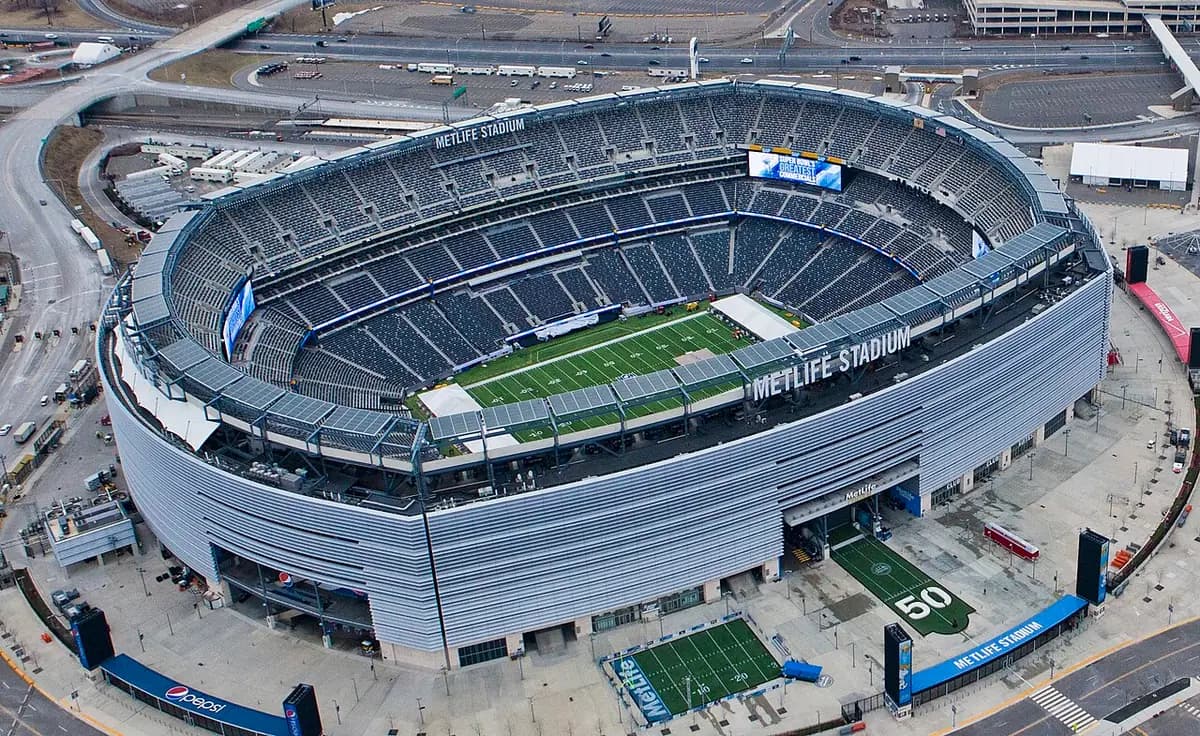
MetLife Stadium in East Rutherford, New Jersey — host of the 2026 World Cup final.
Anthony Quintano, CC BY 2.0, via Wikimedia Commons
AT&T Stadium — Dallas
'Jerry World', home of the Dallas Cowboys, is a monument to doing everything biggest. Opened in 2009 for around 1.2 billion dollars — the most expensive sports venue in the world at the time — it has the world's longest single-span retractable roof (it opens in under 12 minutes) and a colossal center-hung video board, roughly 49 metres wide, that was the largest HD screen on Earth when installed. It set the NFL's all-time attendance record (105,121 in 2009) and has staged Super Bowl XLV, WrestleMania, NBA All-Star Games and college football's biggest nights. At the World Cup it does the most of any 2026 venue — nine matches, including a semi-final — with a tournament-high capacity of up to 94,000. It sits in Arlington, between Dallas and Fort Worth.
Stadium: AT&T Stadium. Base yourself in Dallas.
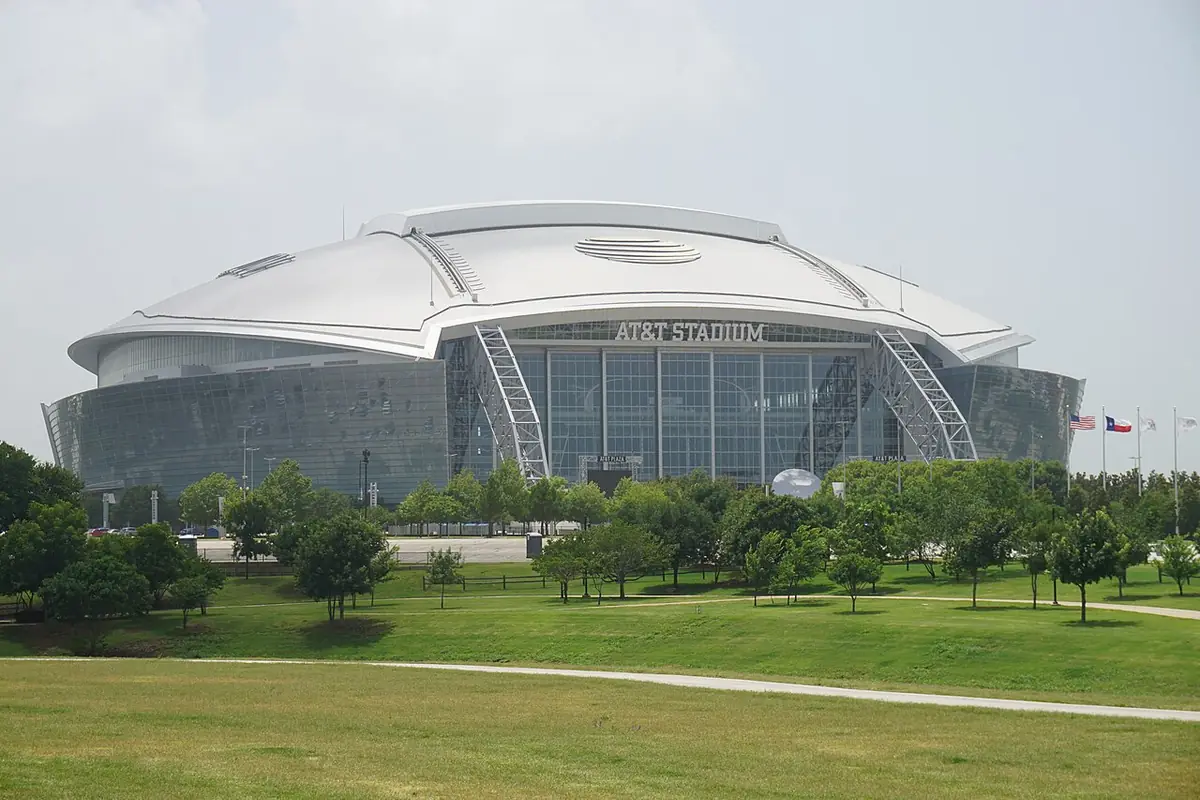
AT&T Stadium in Arlington — 'Jerry World', with the longest single-span retractable roof in the world.
Michael Barera, CC BY-SA 4.0, via Wikimedia Commons
Mercedes-Benz Stadium — Atlanta
Atlanta's 1.5-billion-dollar showpiece, opened in 2017, is one of the most distinctive stadiums anywhere: its retractable roof is a 'pinwheel' of eight translucent petals that irises open like a camera shutter, ringed by a 360-degree 'halo' video board — at about 63,000 square feet, the largest of its kind. Home to the NFL Falcons and the MLS attendance record-breakers Atlanta United, it is also a sustainability landmark (the first major US stadium to reach LEED Platinum) and beloved for its fan-friendly 2-dollar hot dogs. It has hosted Super Bowl LIII and a College Football Playoff final, and is one of the few US venues with a metro stop (MARTA) at the door. At the World Cup it stages a semi-final and a Round of 16.
Stadium: Mercedes-Benz Stadium. Explore Atlanta.
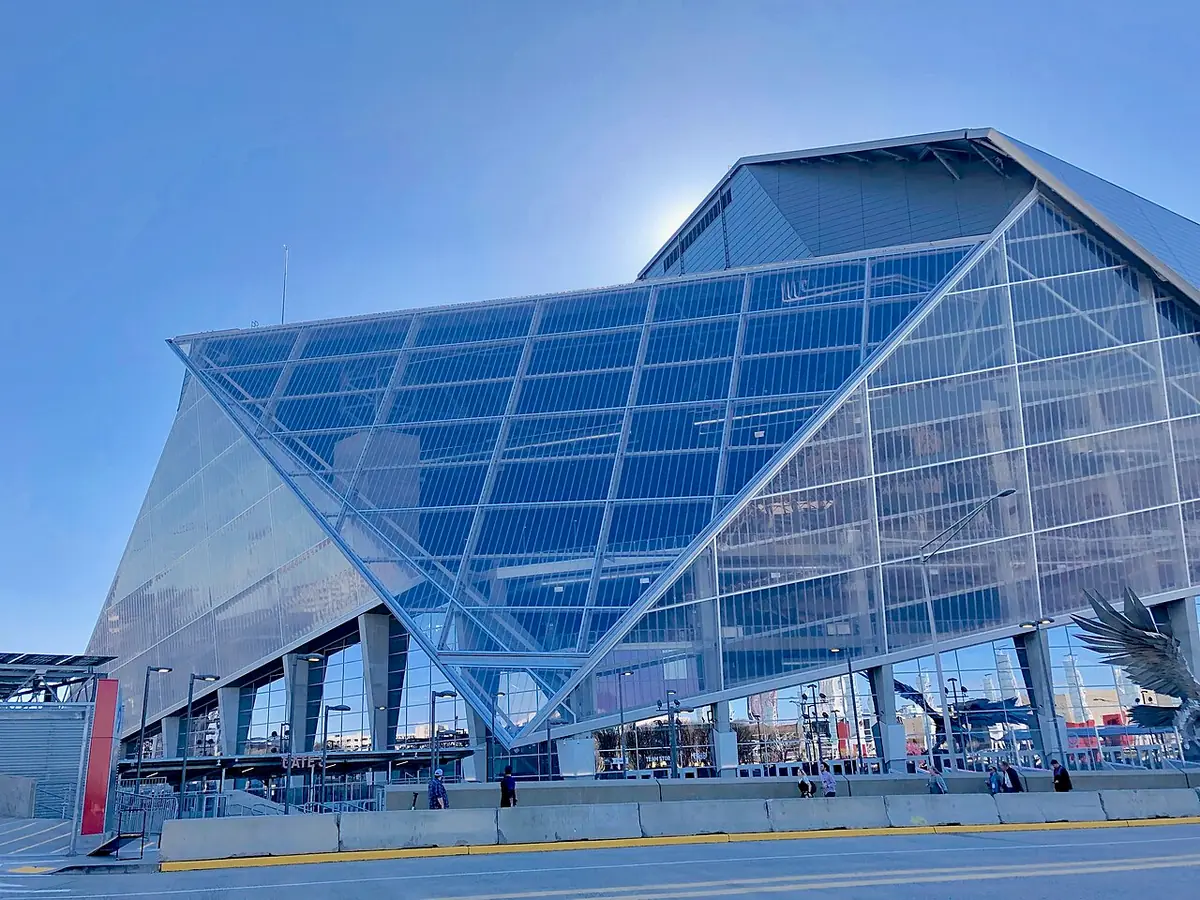
Mercedes-Benz Stadium in Atlanta and its eight-petal 'pinwheel' roof.
Warren LeMay, CC0, via Wikimedia Commons
SoFi Stadium — Los Angeles
The most expensive stadium ever built — over 5 billion dollars, roughly double the next-costliest — SoFi opened in 2020 in Inglewood as the NFL's first true indoor-outdoor stadium. A vast translucent canopy floats over an open-sided bowl, and the double-sided 'Infinity Screen', a 70,000-square-foot video halo, hangs over the field; a seismic moat lets the whole structure ride out earthquakes. Shared by the Rams and Chargers (about 70,000, expandable to 100,000), it has hosted Super Bowl LVI and will co-host the 2028 Olympic ceremonies. At the World Cup it stages a quarter-final. The Metro K Line reaches the door and LAX is barely 5 km away.
Stadium: SoFi Stadium. Base yourself in Los Angeles.

SoFi Stadium in Inglewood — the most expensive stadium ever built.
Troutfarm27, CC BY-SA 4.0, via Wikimedia Commons
Hard Rock Stadium — Miami
The home of the Miami Dolphins opened in 1987 and reinvented itself with a 450-million-dollar overhaul that slung a sweeping open-air canopy over the stands, shading some 92 percent of seats from the Florida sun. One of the most event-packed venues in the country, it has hosted six Super Bowls, two World Series and a College Football Playoff final, and each year stages the Miami Open tennis and the Formula 1 Miami Grand Prix on a circuit around the grounds. Seating about 65,000 in Miami Gardens, 25 km north of South Beach, at the World Cup it lands two showpieces: a quarter-final and the third-place playoff.
Stadium: Hard Rock Stadium. Explore Miami.
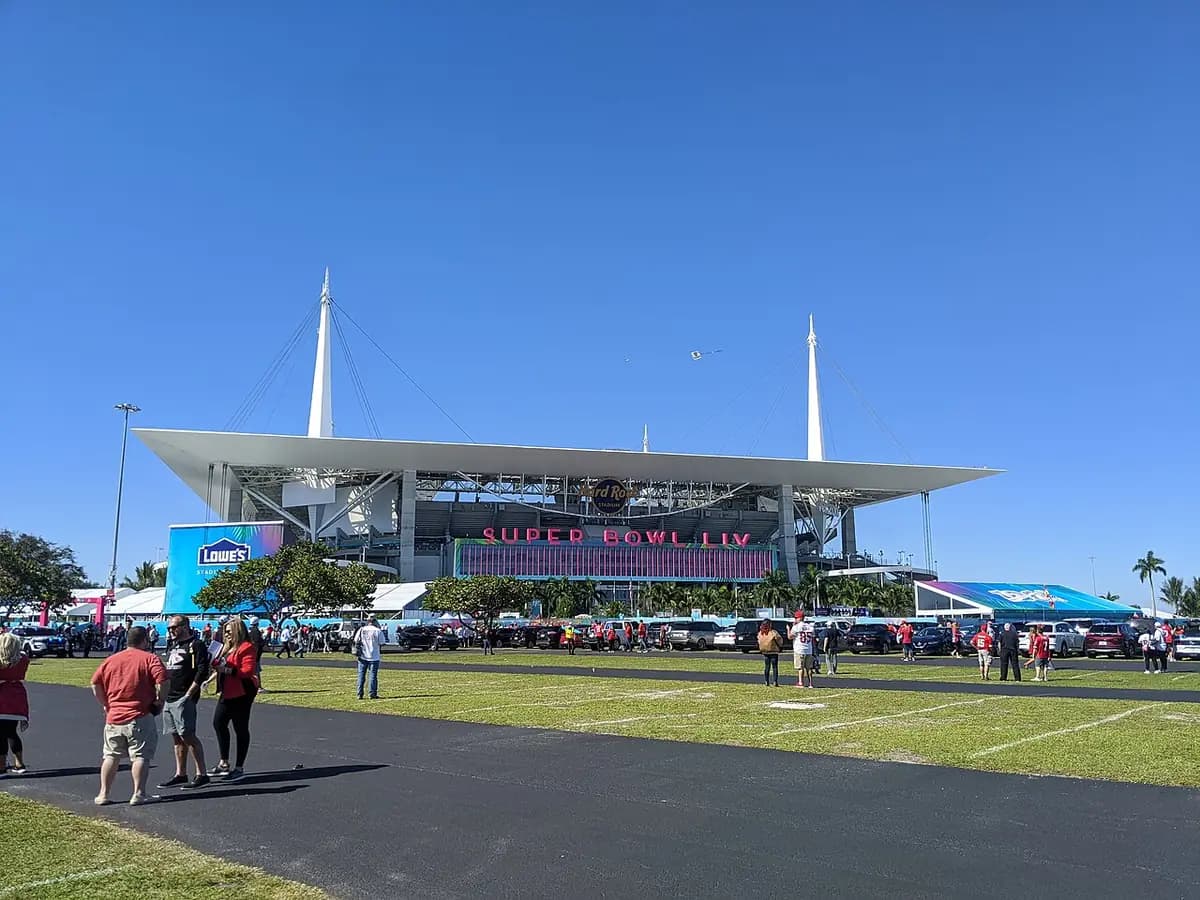
Hard Rock Stadium in Miami Gardens, its canopy shading some 92 percent of the seats.
elisfkc2, CC BY-SA 2.0, via Wikimedia Commons
Gillette Stadium — Boston
Home of the six-time Super Bowl champion New England Patriots, Gillette Stadium opened in 2002 — paid for entirely out of owner Robert Kraft's own pocket, a rarity among big US venues. Its signature is the lighthouse at the open end: a recent 250-million-dollar revamp rebuilt it as a 218-foot tower, the tallest lighthouse in the United States, with a year-round observation deck. It seats about 65,000 in Foxborough, 45 km southwest of Boston, and is also home to the New England Revolution. At the World Cup it stages the tournament's first quarter-final and group matches; MBTA runs match-day trains on the Foxboro Line from Boston's South Station.
Stadium: Gillette Stadium. Base yourself in Boston.
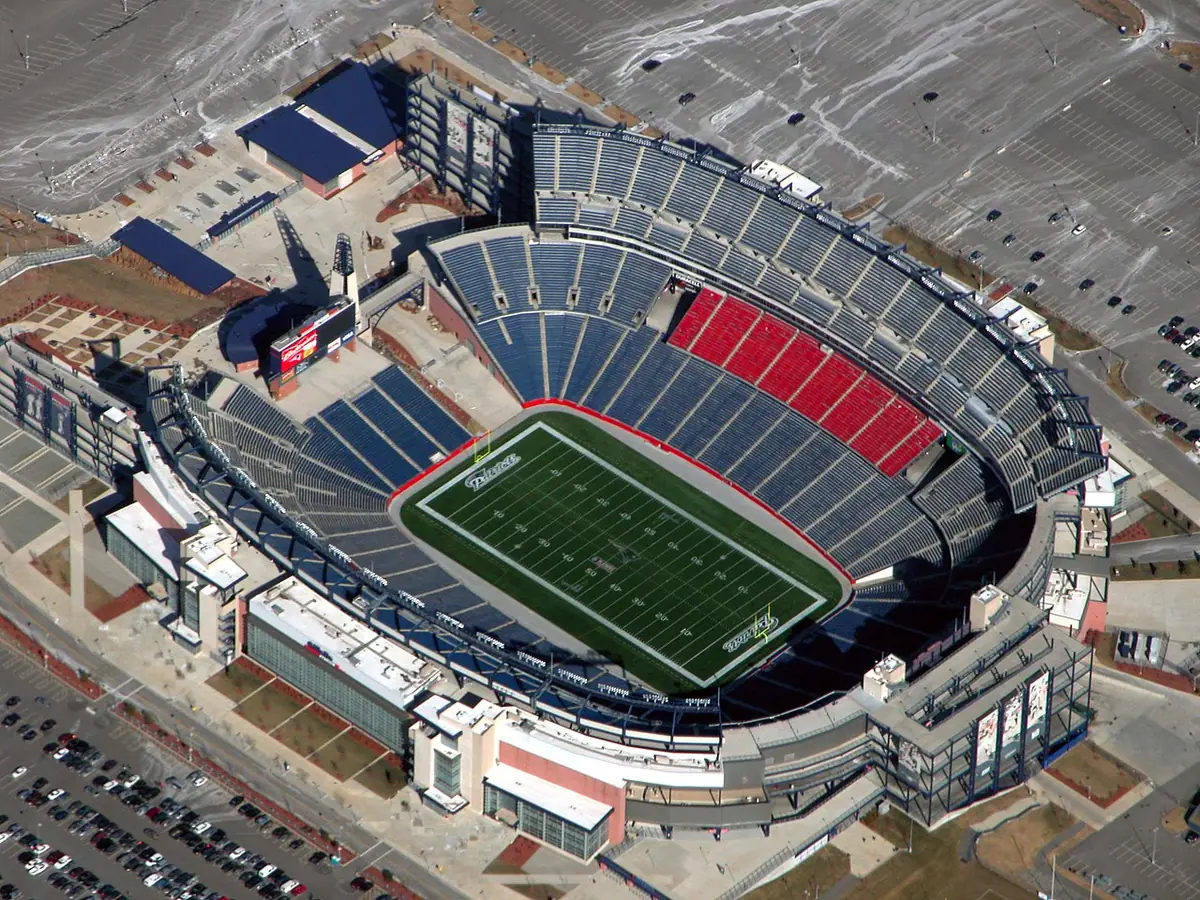
Gillette Stadium in Foxborough — note the lighthouse at the open end, the tallest in the United States.
Art N., CC BY 2.0, via Wikimedia Commons
Arrowhead Stadium — Kansas City
Open since 1972, GEHA Field at Arrowhead Stadium is one of the oldest grounds in the NFL — and the loudest stadium on Earth: Kansas City Chiefs fans set the Guinness World Record for crowd noise here at 142.2 decibels in 2014. That is no accident — its steep, horseshoe-shaped bowl was deliberately designed to funnel sound straight down onto the field. Seating about 76,000 (the NFL's fourth-largest) after a 375-million-dollar renovation, it sits at the Truman Sports Complex east of downtown, beside the Royals' ballpark. At the World Cup it stages a quarter-final and group matches — and few venues anywhere will match its atmosphere.
Stadium: GEHA Field at Arrowhead Stadium. Explore Kansas City.
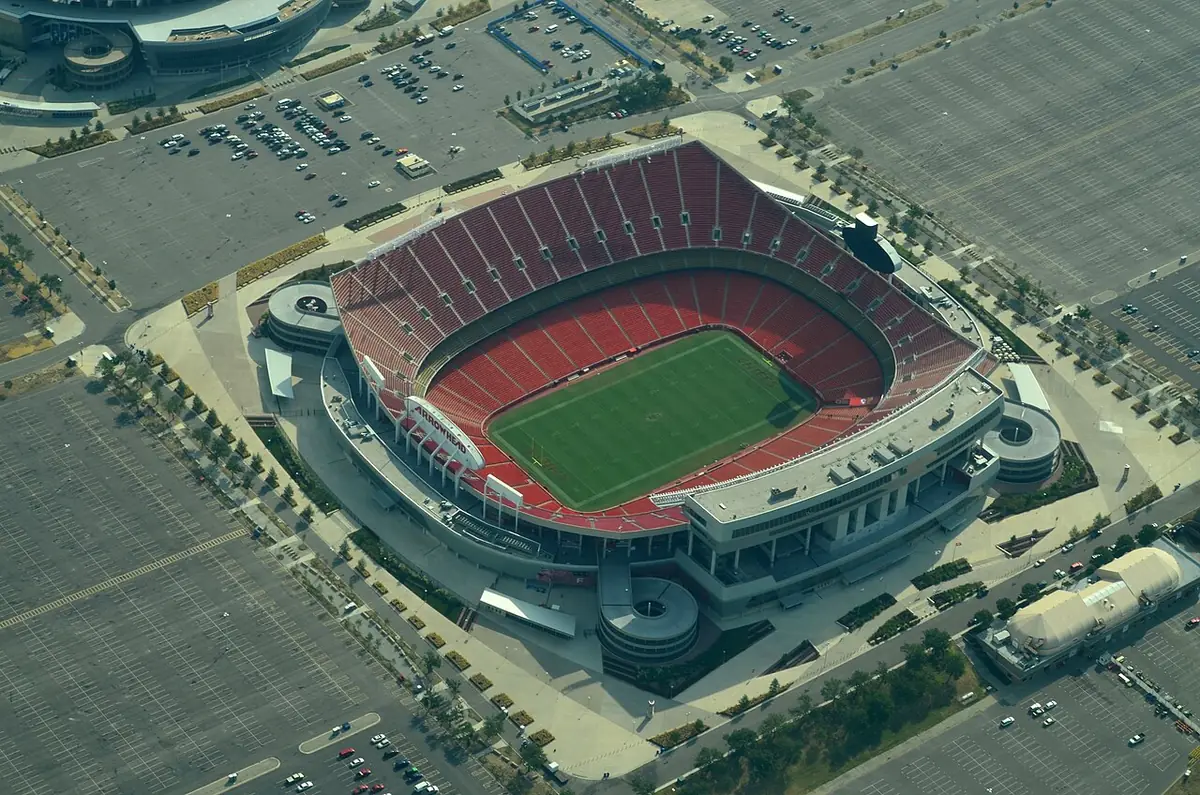
Arrowhead Stadium in Kansas City — the loudest stadium on Earth by Guinness World Record.
Ichabod, CC BY-SA 3.0, via Wikimedia Commons
NRG Stadium — Houston
When it opened in 2002, NRG Stadium became the first NFL stadium with a retractable roof — it closes in about seven minutes to shut out the Gulf Coast heat (and to shelter the world's largest rodeo, which fills it every spring). Home of the Houston Texans and seating around 72,000, it has staged two Super Bowls — including the famous 28-3 comeback of Super Bowl LI — plus the men's Final Four and a College Football Playoff final. It sits just south of downtown and is one of the few US venues served directly by light rail, on Houston's METRORail. At the World Cup it stages group matches and a Round of 16.
Stadium: NRG Stadium. Base yourself in Houston.
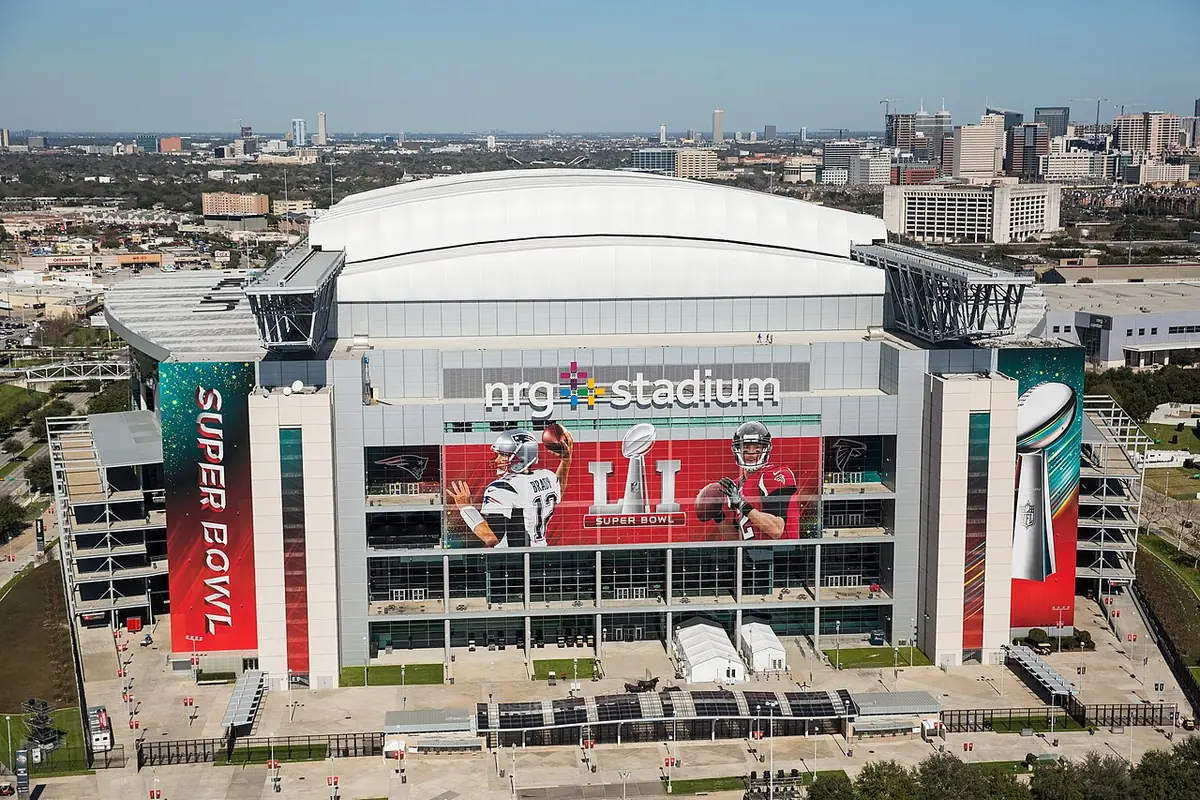
NRG Stadium in Houston — the first NFL stadium built with a retractable roof.
U.S. Customs and Border Protection, public domain, via Wikimedia Commons
Lincoln Financial Field — Philadelphia
'The Linc', home of the Philadelphia Eagles since 2003, brings one of the most passionate — and loudest — crowds in American sport. It is also one of the greenest stadiums in the world: more than a dozen wind turbines line the roof and over 11,000 solar panels help power it, making it the first NFL stadium to earn LEED Gold. Seating about 69,000 in the South Philadelphia Sports Complex, it also hosts the historic Army–Navy game and major concerts. At the World Cup it stages group matches and a Round of 16 — and it is among the easiest venues to reach, about twelve minutes from City Hall on SEPTA's Broad Street Line.
Stadium: Lincoln Financial Field. Explore Philadelphia.
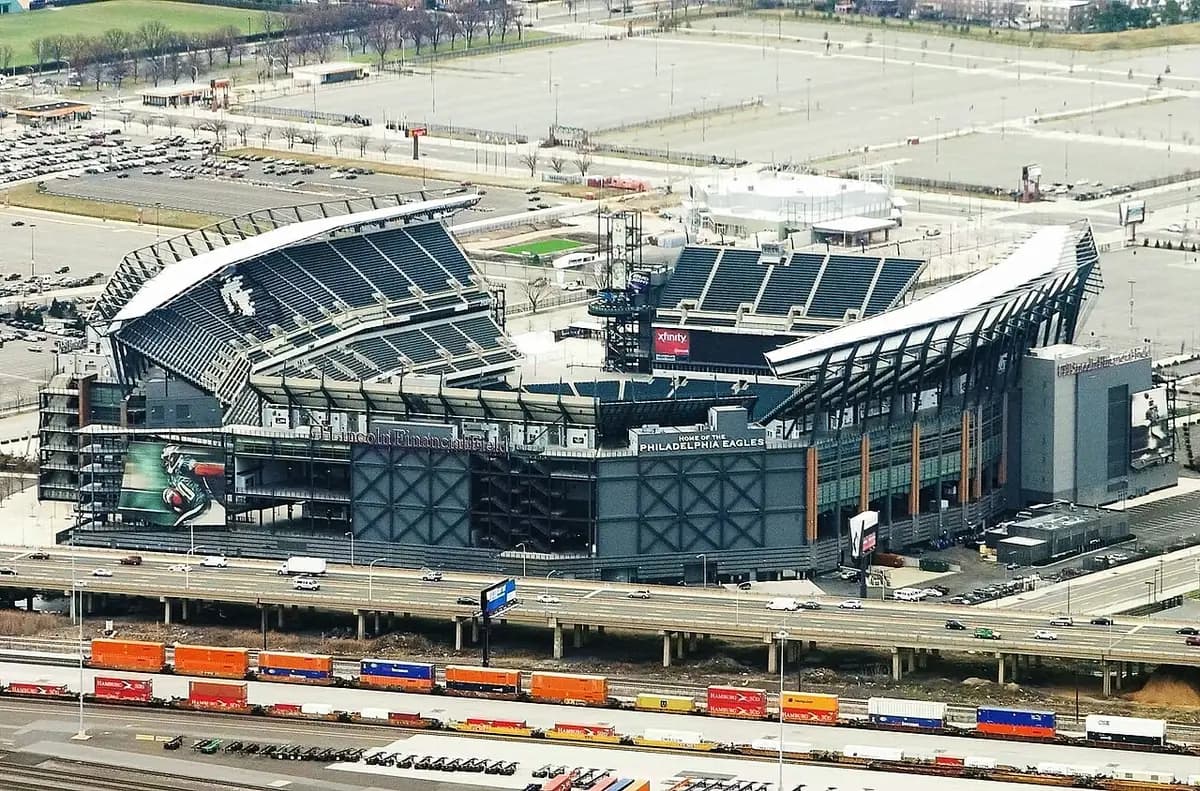
Lincoln Financial Field in Philadelphia — among the greenest stadiums in the world, with rooftop wind turbines.
Ron Reiring, CC BY 2.0, via Wikimedia Commons
Levi's Stadium — San Francisco Bay Area
Opened in 2014 for about 1.3 billion dollars, Levi's Stadium — home of the San Francisco 49ers — was built as one of the most technologically advanced grounds in sport, with stadium-wide wi-fi and an app to order food to your seat, plus a 27,000-square-foot green roof and on-site solar that earned it LEED Gold. It hosted Super Bowl 50 within eighteen months of opening and stages Super Bowl LX in 2026. FIFA lists it as the 'San Francisco Bay Area Stadium', but it actually stands in Santa Clara, 70 km south of San Francisco near San José, linked to the city by Caltrain and VTA light rail. At the World Cup it stages group matches and a Round of 32.
Stadium: Levi's Stadium. Base yourself in San Francisco.
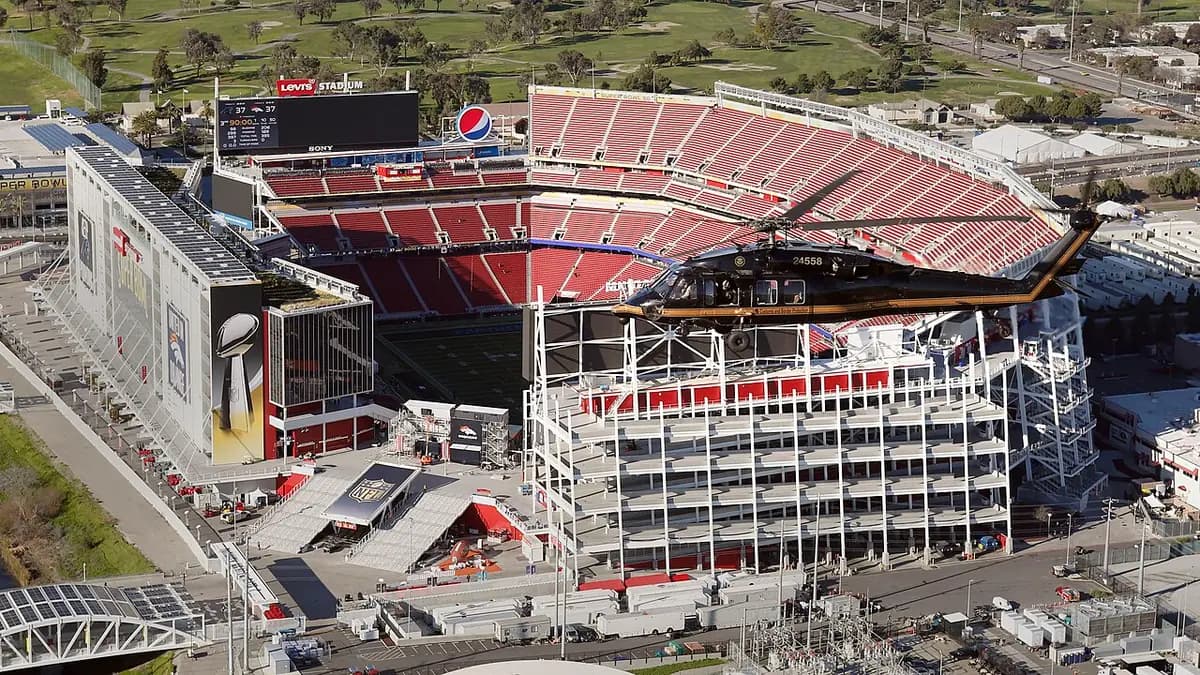
Levi's Stadium in Santa Clara — one of the most tech-laden grounds in sport, here before Super Bowl 50.
U.S. Customs and Border Protection, public domain, via Wikimedia Commons
Lumen Field — Seattle
Built on the site of the old Kingdome and opened in 2002, Lumen Field is famous for sheer noise. Its partial roof covers about 70 percent of seats and works like a megaphone, funnelling the roar of the Seahawks' '12s' onto the pitch — fans set the Guinness crowd-noise record here twice in 2013 (before Kansas City reclaimed it), and once provoked 11 false-start penalties from a single visiting team in one game. Shared with the Sounders, among the best-supported clubs in MLS, it seats about 69,000 and is one of the most central venues in the tournament, in Seattle's SoDo district with Link light rail at the gates. At the World Cup it stages group matches and a Round of 16.
Stadium: Lumen Field. Explore Seattle.
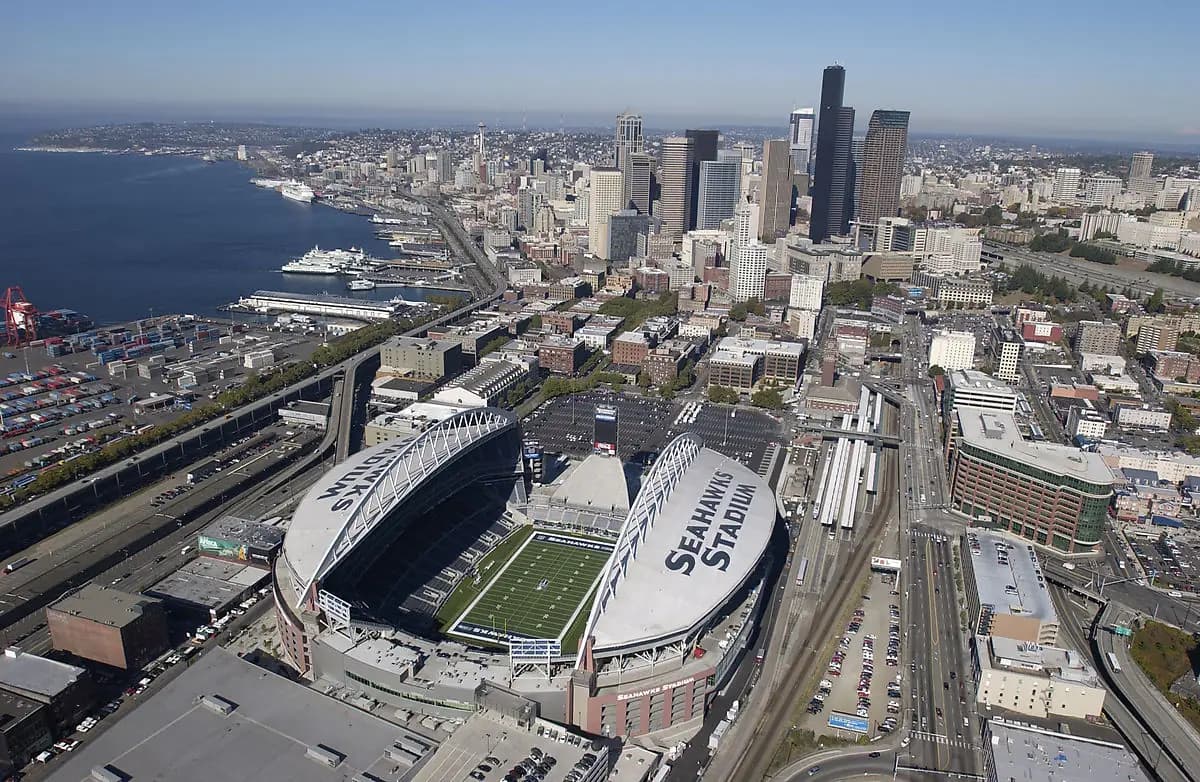
Lumen Field beside the downtown Seattle skyline — one of the most central venues in the tournament.
Seattle Municipal Archives, CC BY 2.0, via Wikimedia Commons
Stadiums in Canada and Mexico
The World Cup does not stop at the US border. Canada hosts matches at two stadiums — BMO Field in Toronto, right on the Lake Ontario shore, and the retractable-roofed BC Place in downtown Vancouver, a 2010 Winter Olympics venue. Mexico brings three of the tournament's most storied grounds: the vast Estadio Azteca in Mexico City, the only stadium to host three men's World Cups, which stages the opening match; Estadio Akron in Guadalajara; and Estadio BBVA in Monterrey, framed by the Cerro de la Silla mountain.
For the full story of the Canadian venues and their host cities, see our guide to the Canada World Cup stadiums.
AT&T Stadium in Dallas, which expands to about 94,000 for the World Cup — the tournament's largest capacity — and already holds the NFL's all-time attendance record of 105,121. MetLife Stadium near New York (around 82,500) is the largest permanent NFL stadium, and SoFi Stadium in Los Angeles, while seating about 70,000, is the most expensive ever built.
Three have retractable roofs: AT&T Stadium in Dallas (the world's longest single-span operable roof), Mercedes-Benz Stadium in Atlanta (the eight-petal 'pinwheel') and NRG Stadium in Houston (the first NFL stadium ever built with one). SoFi in Los Angeles has a fixed translucent canopy over an open-sided bowl, and Hard Rock (Miami) and Lumen Field (Seattle) have partial canopies that leave the pitch open. The rest — MetLife, Gillette, Arrowhead, Lincoln Financial and Levi's — are fully open-air.
Arrowhead Stadium in Kansas City holds the Guinness World Record for the loudest crowd noise at a sports stadium — 142.2 decibels, set by Chiefs fans in 2014 — thanks to a horseshoe bowl built to funnel sound onto the field. Lumen Field in Seattle, home of the Seahawks' '12s', held that same record twice before Kansas City took it back, and is widely rated the next loudest.