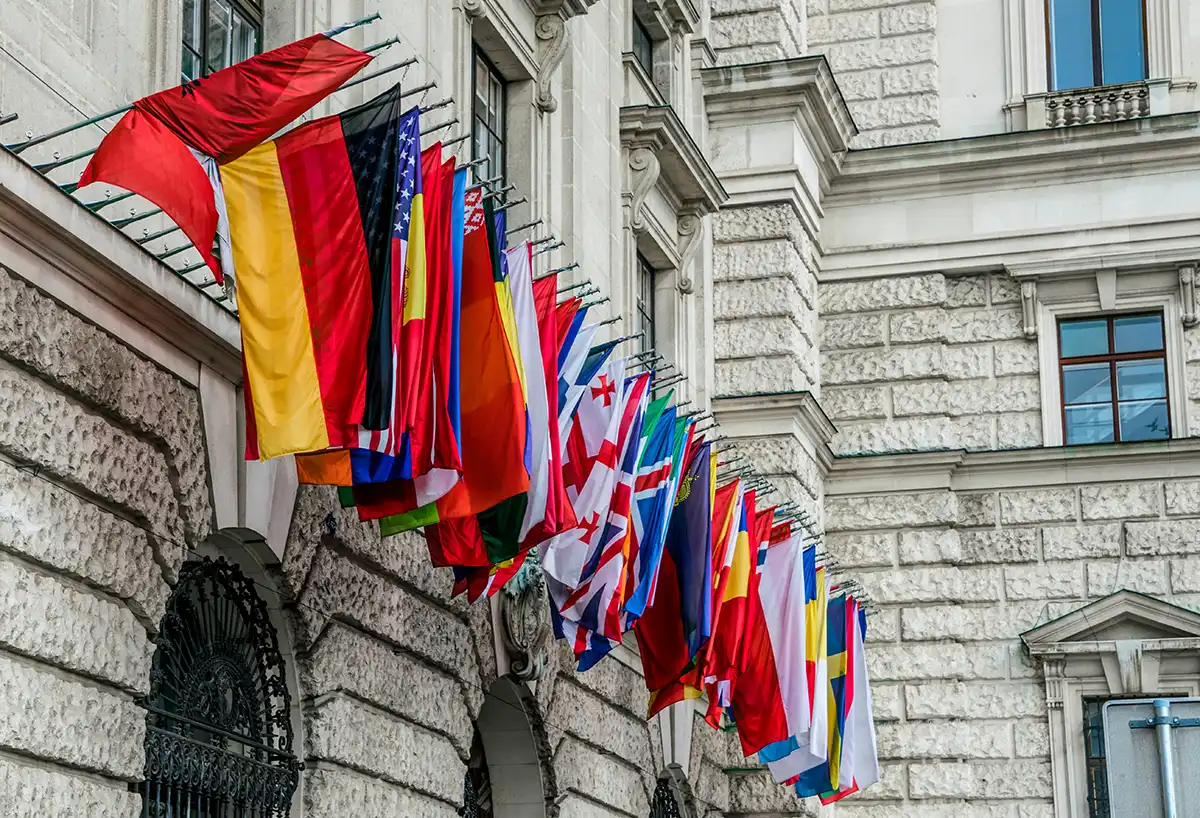
The US Foreign Service has roughly 270 embassies and consulates worldwide. Joining it means passing the Foreign Service Officer Test, the Qualifications Evaluation Panel, and the Oral Assessment — a selection pipeline that screens out almost everyone who applies. Those who get in agree to something most professional careers don't ask of you: a working life of three- or four-year postings, spread across five to seven countries, with the State Department deciding most of where you go.
Most public attention on this career goes to the salary. That's understandable — the State Department's pay scales are public, and the ambassadorial title carries enough prestige that people expect the paycheck to match. The reality is more complicated, and more interesting. The base salary is not the figure the public imagines, and even at the Senior Foreign Service level, the pay table tells only part of the story.
That gap between the public image and the actual answer is where the conversation gets useful for anyone seriously considering this career: what does an American diplomat actually earn, and which posts genuinely shape a Foreign Service career?
What an American diplomat actually earns
New Foreign Service Officers enter at grades FS-6, FS-5, or FS-4, depending on education and qualifying experience. Entry-level base salary at FS-6 sits in the rough range of USD 5,200 to 5,800 per month — about USD 62,000 to 70,000 a year before locality pay. That's solid for a federal entry job; it's not the figure most readers associate with the word "ambassador." A Master's degree typically places candidates at FS-5 or FS-4, with a modest base premium.
Career progression runs from FS-6 to FS-1, then into the Senior Foreign Service (SFS) tiers — FE-OC, FE-MC, FE-CM, and at the very top the rarely-awarded Career Ambassador rank. Ambassadorships are typically held by FS-1, FS-2, or Senior Foreign Service officers, with base salaries running well into the six figures. On top of base pay, the Foreign Service has the most elaborate post-allowance system of any US federal job: Post Differential (added pay for hardship), Cost of Living Allowance (for expensive posts like Tokyo, London, Geneva), Danger Pay (for combat-zone or high-threat posts like Baghdad or Kabul historically), housing provided in kind, schooling for dependents, and Foreign Language Incentive Pay. On a hardship post the combined package can substantially exceed the base salary.
But the most interesting compensation in this career doesn't show up on any pay statement. The real "pay" is something more structural: a working life across continents, children who grow up multilingual, the access that comes from representing the United States in rooms where bilateral decisions are made, and the operational weight of carrying the world's most consequential foreign policy. That form of compensation explains, more than any pay grade, which posts inside the Service are quietly fought over.
- Strategic weight of the country to US foreign-policy, economic and security interests
- Visibility from Washington — work that's read in the West Wing or on the Seventh Floor accelerates a career
- Quality of life on post: housing, schools, medical access, climate, and family fit
- Language match and operational complexity — Mandarin and Russian posts pay an incentive but compound the workload
- Hardship and danger profile: differential and danger pay rise with risk, and so does the impact on career-shaping

Which Foreign Service posts get fought over rarely comes down to base pay alone. Mandate, representation, daily life, and operational pressure carry far more weight.
LIGHTFIELD STUDIOS / Adobe Stock
The US Embassy at the heart of the Anglo-American relationship — high-visibility, intensely watched, career-defining.
If there's a single post in the US Foreign Service that signals seniority and trust without needing explanation, it's the US Embassy in London. The Anglo-American relationship is the most-scrutinized bilateral file the United States runs — politically, militarily, economically, and culturally. An ambassador in London works inside that scrutiny every day.
What makes London demanding isn't a single issue. It's the layering. The intelligence relationship, the NATO file, transatlantic financial flows, joint export controls, the British press, the dense calendar of US visiting principals from Cabinet level downward — all of it lands on the same desk. The embassy at Nine Elms is one of the State Department's most expensive and most visible, and the people running it operate under constant high-visibility pressure.
That visibility is also why London is one of the most career-defining posts in the Service. Add the destination itself — the United Kingdom as a place to live with a family, with an English-language environment, world-class schools, and short reach to the European continent — and the appeal compounds. London isn't comfortable, but it's a post that re-orders a career.
The bilateral relationship the entire US foreign-policy community pays attention to — and the embassy where the granular work happens.
The US Embassy in Beijing runs what is now arguably the most consequential bilateral relationship in American foreign policy. Strategic competition, trade and technology controls, climate cooperation, military deconfliction, consular work for hundreds of thousands of US citizens transiting or living in China — all of it routes through a single mission, supported by US consulates in Shanghai, Guangzhou, Hong Kong, Chengdu, Shenyang, and Wuhan.
The professional appeal is obvious. This is the post where US-China policy is implemented, where the next generation of China-focused Foreign Service Officers earn their reputations, and where every demarche, every diplomatic note, and every public statement is read in Washington within hours. Mandarin proficiency commands an incentive payment, and a Beijing tour weighs heavily in any subsequent promotion board.
The cost is real. Air quality, surveillance pressure on diplomats, restricted mobility, demanding hours driven by the Washington time zone. Beijing is not a quality-of-life post. It's a posting people accept because it puts them at the center of one of the most important files in American diplomacy — and because a tour there changes what comes next.
Surprisingly substantive bilateral file, English-language environment, and one of the most family-friendly tours in the Service.
The easiest mistake when reading about Foreign Service postings is to assume that prestige and difficulty correlate with the size of the host country. The US Embassy in Dublin is a useful counter-example. The US-Ireland bilateral file is denser than people expect — US multinationals (Apple, Meta, Pfizer, Google, Intel) have made Ireland a strategic European base, the Irish diaspora ties run deep into American political life, and the diplomatic, economic, and consular workload reflects all of it.
What makes Dublin one of the quietly most-sought postings in the Service is the combination of substantive work and high quality of life. Ireland offers an English-language environment for families, excellent schools, accessible health care, short reach to the rest of Europe for travel and home leave, and a host society that is generally welcoming to American diplomats. The package is, by Foreign Service standards, comfortable in a way that few full-faith bilateral posts manage.
For a Foreign Service career, Dublin is the type of post that proves a different point: not every career-shaping assignment has to be a heavyweight capital. Some posts get fought over because they make a family life possible at the same time as serious work — and Dublin is one of them.
Quiet on the front pages, deeply substantive on intelligence and Pacific files — and one of the highest-quality-of-life assignments in the Service.
The US Embassy in Wellington is one of the most geographically distant posts in the US Foreign Service. The bilateral relationship with New Zealand doesn't run on big-headline issues; it runs on the substantive — Five Eyes intelligence cooperation, Pacific Islands strategy, climate and ocean diplomacy, a steady tourist and study-abroad flow of US citizens, and a deeply aligned democratic partnership.
What Wellington is rarely understood to be is one of the highest-quality-of-life tours in the entire Service. A small, walkable capital; clean air; intact natural environment within reach in every direction; some of the best schools in the OECD; and a host country that is genuinely welcoming to American diplomats and their families. For families that want a post where childhood can have weekends in national parks rather than weekends in motorcades, Wellington is a quietly prized assignment.
The trade-off is distance. A return to the US is twenty-plus hours of flying, Washington calls happen at New Zealand night, and major-event participation in DC requires planning. But the post offers something that career boards have started to recognize more openly: a tour that doesn't damage a career, on a file that is increasingly strategic, in a country where a Foreign Service family can actually live well.
A post in suspended operations, evacuated in 2023, that nevertheless shapes the careers of the diplomats who carried it.
Any honest answer to what a Foreign Service career involves has to include the hardship post. The US Embassy in Khartoum has run for years under conditions most American workplaces would consider intolerable, and following the outbreak of the Sudan conflict in 2023 the embassy was evacuated, with diplomatic and consular work for Sudan handled remotely from neighbouring posts.
What the hardship post asks of a diplomat is something the comfortable posts don't. Reduced mobility, security protocols that govern daily life, family-status restrictions, shortened rotations, and the operational tempo of working under crisis conditions. These tours come with Danger Pay and the highest Post Differential rates the State Department awards — but the financial premium is the smallest part of what makes them count.
Inside the Service, evacuation-grade hardship assignments carry weight that the public ranking of "glamour posts" doesn't capture. They demonstrate that an officer can run a mission under stress, that they can perform when the standard operating environment collapses, and that they can be trusted with the next crisis. A Khartoum tour, or a Kabul tour during the closing years before the 2021 withdrawal, is the kind of assignment that quietly rebuilds a career trajectory — long after the post itself is gone.
Embassy, consulate, and honorary consulate are not the same Foreign Service experience
Anyone considering a Foreign Service career should understand the difference between embassy, consulate, and honorary consulate postings. The distinction is not cosmetic. It changes the nature of the work, the level of responsibility, and the visibility within the Service.
An embassy posting concentrates political representation, government-to-government interlocution, and coordination across all sections — political, economic, public affairs, consular, defense attaché. A consulate posting (e.g. Consul General in Naples or Edinburgh) puts an officer closer to consular practice and citizen-services workload and offers a different kind of leadership track. An honorary consulate is something else entirely — typically a part-time appointment held by a private citizen of the host country, with very limited services and no Foreign Service career path.
For anyone moving from general interest to concrete career planning, the page on the diplomatic career is a natural next step.
Careers — US Department of State
The official Foreign Service careers portal: tracks (FSO, Foreign Service Specialist, Civil Service), the Foreign Service Officer Test, the Oral Assessment, and benefits.
Foreign Service entry-level salaries
Official State Department reference on entry-level Foreign Service pay grades (FS-6 through FS-4), step structure, and the typical Master's-degree placement.
U.S. Department of State
The main State Department site: bilateral relationships, the global network of US embassies and consulates, and current foreign-policy priorities — the institutional ecosystem an American diplomat works inside.
American Foreign Service Association (AFSA)
The professional association and labor union of the US Foreign Service. Salary tables, post-by-post benefits explainers, and an inside-the-service perspective on what a career actually looks like over time.
“The real compensation in a Foreign Service career doesn't appear on any pay scale. It shows up in the places you've lived, the relationships you've built, and the question of which posts diplomats actually compete for inside the system when the salary stops being the main criterion.”
If the criterion is visibility and strategic weight, London is the clearest case in this selection. If the criterion is the bilateral file the rest of US foreign policy bends around, Beijing is hard to overtake. If the criterion is genuinely substantive work paired with a family-friendly life, Dublin punches above its size. If quality of life on a distant but strategic file is the priority, Wellington has a gravity few posts can match. And if the criterion is the hardship that quietly rebuilds careers, Khartoum is what the brochure version of the Foreign Service never quite tells you about.
Read this way, the question that started this article — what does an American ambassador earn — turns out to be the wrong frame. The right question is which posts a Foreign Service Officer would actually fight for inside the system if pay grade weren't the criterion. The real compensation of this career is not the monthly base; it's the sum of the places lived, the relationships built, and the rooms where, for a few years at a time, an American diplomat was the voice of the United States.